
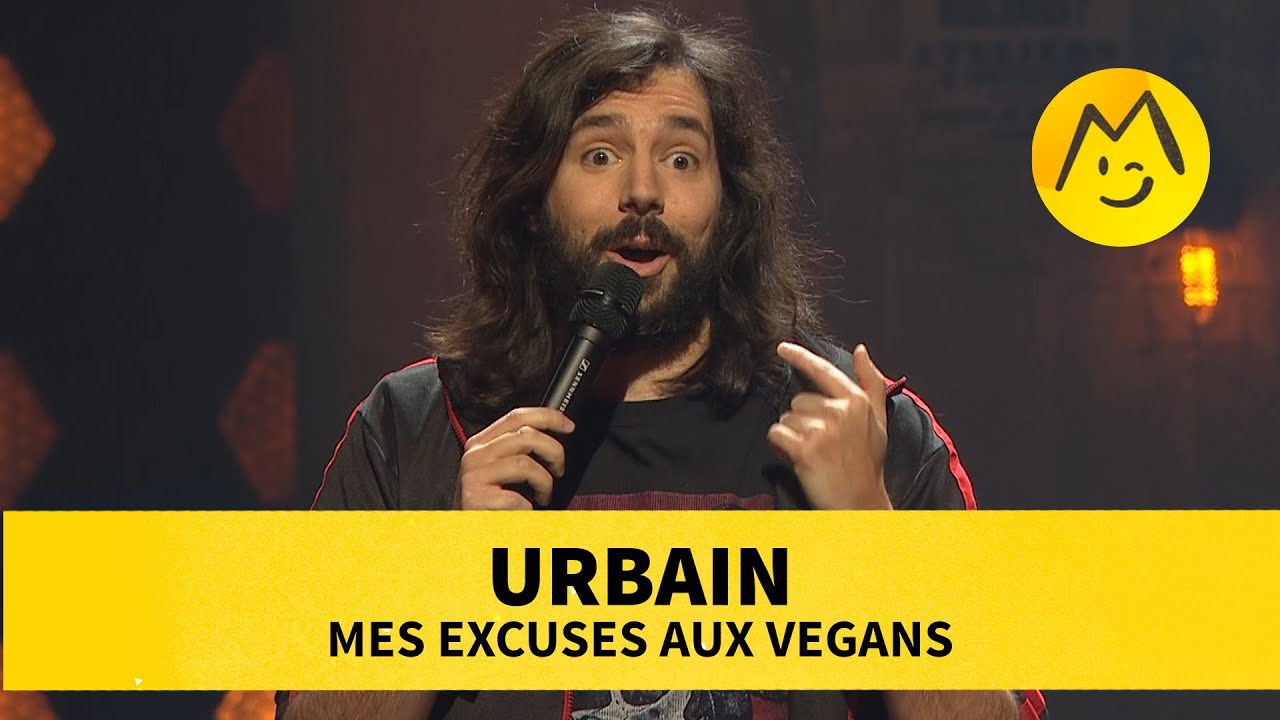
When Urbain apologizes to the “vegans” at the Montreux Festival, only to end up declaring his love for the French language, you really have to master a language quite different from the one taught in our classrooms, and yet his lexical liberties and colloquialisms are quite common and perfectly understandable to the majority of native French speakers…
There are traditionally three language registers: colloquial, formal, and familiar, but there are others, including slang.
Slang amuses, slang fascinates; slang is considered “fun,” there is a sense of joy in using this “marginal” language, this language within a language, a sort of enclave of freedom within a linguistic framework sometimes perceived as a bit too rigid, a bit too serious…
Here is a basic definition:
https://fr.wikipedia.org/wiki/Argot
Why is slang so prevalent in French in informal contexts? How does the process of its spread across all social classes unfold?
At its core, it is indeed a distinct register that serves a communicative purpose to maintain a sense of “in-group” solidarity within certain so-called working-class groups. However, over time, certain slang words are sometimes assimilated to the point of becoming the norm, when a majority of speakers use them. It goes without saying that these words are officially included in current dictionaries, after validation by lexicographers.
How does this process work? While it may originally be a specific usage, limited to a socially distinct group, over time the usage spreads to the so-called “middle” classes and eventually reaches the upper classes through a process of gradual assimilation… The use of a word that benefits from a sort of trend, because it “sounds cool” to say this slang word instead of a more common one—it makes you seem more “trendy,” even “edgy”…
Take, for example, the word “taf” instead of “place de travail,” or “taffer” instead of “travailler”…
Here are a few ambassadors of this so-called “flowery” language:
First, let’s mention Pierre Perret, who made extensive use of slang in his songs, even going so far as to write a book titled “Le petit Perret illustré” and then a full-fledged slang dictionary;
Discover this essential slang poet via his website:
https://pierreperret.fr/son-oeuvre/biographie/
For example, he reimagined La Fontaine’s Fables in his own style…

How can one discuss slang without mentioning Georges Brassens, who shared the same approach—playing with words in a context that was often politically engaged and libertarian?
Here is a glimpse of a particularly rich and carefully chosen vocabulary, where slang blends with the most refined nuances:
https://fr.wikipedia.org/wiki/Les_Mots_de_Brassens
In rural areas, up until the mid-20th century, a local dialect was used that served the same purpose as slang: to have a language all its own, belonging to a specific geographic group. However, slang developed in Paris and the Paris region, an area characterized by a language that has neither a distinct accent nor a distinct history… And the quintessential image is Victor Hugo’s Gavroche from *Les Misérables*, a street urchin who uses colloquial language to communicate with members of his social group, the idea being to avoid being understood by the bourgeoisie or the authorities.
A popular singer cultivated this style, right down to his clothing, just like Gavroche… “Renaud,” a libertarian singer who left his mark on his era by contributing to the development of an alternative French language through his songs, blending slang and verlan as well as more personal creations, taking great liberties with grammatical structures and verb conjugation. The themes of his songs revolve around social activism, social demands, and criticism of authoritarian regimes, but also include beautiful stories of love and friendship.
Here is the famous example with “Laisse béton”:

Or “Dans mon HLM”:

Here is a comprehensive study that is very illuminating from a lexical and linguistic perspective…
http://www.sharedsite.com/hlm-de-renaud/bibliotheque/etudiant/e_ania_hawro/ania_hawro_00_02_00_neologie.htm
In conclusion, here is one last example of “coded” language, the famous “louchebem,” otherwise known as butchers’ slang:

For further reading, here is a fairly comprehensive educational website to help you explore the topic with your students:
For my part, I suggest a basic but very effective and easy-to-implement activity: use one of the sources cited in this article and ask students to hunt for slang terms, then propose a version using standard or even formal language.
Many lyrics by contemporary singers lend themselves well to this type of lexical activity. Take the very beginning of Stromae’s “Alors on danse”: “When you say studies, you say work; when you say work, you say cash…” ” You can ask your students to bring in songs of their own that they can study beforehand and then share their lexical analysis with their classmates.